
How Long Does Electrolysis Take? Sessions, Hair Cycles, and Expectations
When people begin exploring permanent hair removal, excitement often comes with one important question: how long does electrolysis take? Unlike shaving, waxing, or other temporary methods, electrolysis focuses on permanently disabling hair follicles, which means the process naturally requires time and consistency. While many people are drawn to electrolysis because of its long-term results, understanding how treatment timelines work is essential before starting sessions.
How Electrolysis Works and Why Time Matters
Electrolysis removes hair by inserting a fine probe into the hair follicle and delivering controlled electrical energy that permanently destroys the growth centre of the hair. Because each hair follicle must be treated individually, treatment requires multiple sessions over time.
Unlike shaving or waxing, which only remove hair at the surface, electrolysis hair removal targets the follicle directly. This means results develop gradually rather than overnight. Knowing how sessions are structured, how hair growth phases affect treatment, and what realistic timelines look like helps you stay informed and confident throughout the process. This is what allows electrolysis to produce permanent results, but it also explains why treatment takes longer compared to temporary methods.
Understanding Electrolysis Hair Growth Cycles
To understand how many electrolysis sessions are needed, it’s important to understand electrolysis hair growth cycles. Hair grows in three stages:
Anagen Phase (Active Growth Stage)
This is when hair is actively growing and attached to the follicle. Electrolysis is most effective during this phase because the follicle is fully developed.
Catagen Phase (Transition Stage)
Hair stops growing and begins detaching from the follicle. Electrolysis can be less effective during this stage.
Telogen Phase (Resting Stage)
Hair rests before eventually shedding. Because the follicle is inactive, treatment during this stage may not permanently destroy the follicle.
Since not all hair grows at the same time, electrolysis requires repeated sessions to target follicles as they enter the active growth phase.
How Long Does Electrolysis Take Per Session?
The duration of each electrolysis treatment session depends on the treatment area and hair density. Smaller areas, such as the upper lip or chin, may take 15 to 30 minutes, while larger areas, such as legs or back, may require longer appointments.
Many clients begin with shorter sessions that gradually increase as hair reduction progresses. Treatment time also becomes shorter as hair growth slows and follicles weaken.
How Many Electrolysis Sessions Are Needed?
When clients ask how many electrolysis sessions are needed, the answer depends on several factors, including:
- Hair thickness and density
- Treatment area size
- Hormonal influences
- Consistency of appointments
- Individual hair growth patterns
Most individuals require multiple sessions spread across several months to achieve complete hair removal. Some areas may require maintenance visits depending on hormonal changes or new hair growth.
Following a structured electrolysis treatment schedule helps ensure hair follicles are treated at the correct growth stage, which improves efficiency and results.
Why Consistency Matters in Electrolysis
Consistency is one of the most important factors in treatment success. Skipping sessions can allow untreated follicles to continue producing hair, which may extend treatment timelines.
Experienced clinics, including Top Electrolysis, often design customised treatment plans based on hair type and growth patterns. These personalised schedules help clients maintain steady progress while supporting long-term results.
Is Electrolysis Faster Than Laser Hair Removal?
Another common question is whether electrolysis is faster than laser hair removal. Laser treatments can treat larger areas quickly because they target multiple hair follicles at once. However, lasers typically reduce hair growth rather than permanently removing every follicle.
Electrolysis takes longer because each follicle is treated individually, but it is recognised as a permanent hair removal method. For many individuals, especially those with lighter hair or certain skin tones, electrolysis provides more reliable long-term results despite longer treatment timelines.
Factors That Influence Electrolysis Treatment Duration
Several factors determine how long treatment may take:
Factors Influencing Electrolysis Treatment Duration
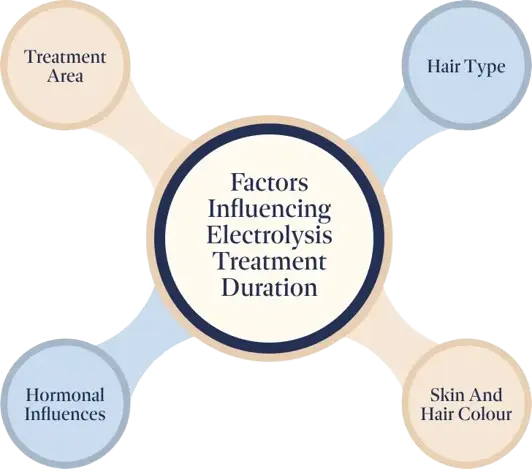
Treatment Area: Smaller facial areas usually require fewer total treatment hours compared to larger body areas.
Hair Type: Coarse hair may require slightly longer treatment, while fine hair can sometimes be treated more quickly.
Hormonal Influences: Hormonal changes can stimulate new hair growth, which may extend treatment timelines.
Skin and Hair Colour: Electrolysis works on all skin tones and hair colours, but hair density still affects treatment duration.
What Happens Between Electrolysis Sessions?
After each session, following proper post-electrolysis care helps protect treated skin and supports healing. Typical aftercare recommendations may include avoiding heat exposure, protecting treated areas from sun exposure, and using gentle skincare products.
Consistent aftercare helps minimise irritation and supports overall treatment progress.
What to Expect During the Electrolysis Process
Electrolysis treatments are typically gradual. Clients often notice hair becoming finer and slower to grow after several sessions. Over time, follicles weaken and eventually stop producing hair.
Many people find it helpful to think of electrolysis as a long-term investment rather than a quick fix. The process requires patience, but the permanent results often make the time commitment worthwhile.
Electrolysis Timeline for Different Areas
Although timelines vary, typical estimates include:
- Facial areas: Several months with consistent sessions
- Underarms or bikini areas: Moderate treatment timelines
- Larger body areas: Longer treatment commitment
Individual results vary, which is why professional consultation is important before beginning treatment.
Why Personalised Treatment Planning Matters
Each person’s hair growth pattern is unique. Custom treatment plans allow providers to adjust session length and frequency based on individual progress.
At Top Electrolysis, treatment planning focuses on understanding hair density, growth cycles, and client goals. This personalised approach helps optimise treatment efficiency while maintaining skin comfort and safety.
Final Thoughts
So, how long does electrolysis take? For most people, treatment averages around 18 months with weekly or biweekly sessions, as hair must be treated during its active growth cycles. Because of this natural process, consistency over several months is key to achieving full clearance.
In cases involving hormonal conditions or laser-stimulated hair growth, treatment may extend to two to three years. Working with experienced professionals can help keep progress steady and manageable. At Top Electrolysis, we focus on personalised treatment plans and careful scheduling to support long-term results. With the right expertise and consistent scheduling, electrolysis can provide lasting smoothness and confidence.
