
Electrolysis Scarring: Myths, Risks, and How to Avoid It
If you’re considering electrolysis but secretly worrying, “What if this leaves scars?” then you’re not alone. For many people, the fear of skin damage is the one thing that stops them from committing to treatment. Smooth skin is the goal, not new marks to hide. And with so much mixed information online, it can be hard to tell what’s realistic and what’s exaggerated.
Understanding what actually causes scarring after electrolysis, and how to prevent it, can give you clarity and confidence before starting treatment. In this guide, we’ll break down the real risks, separate myth from fact, and explain exactly how to protect your skin throughout the process.
Does Electrolysis Cause Scarring?
Let’s start with the question that’s probably sitting in your mind: Does electrolysis cause scarring?
The honest answer? In properly performed treatments, permanent scarring is extremely uncommon. Electrolysis works by inserting a fine probe into the natural opening of the hair follicle, not by cutting the skin. Because the skin surface isn’t being sliced or removed, the risk of structural damage is low when the treatment is done correctly.
As per the National Library of Medicine, electrolysis is recognised as a FDA approved method of permanent hair removal. When performed by trained professionals using appropriate technique and hygiene standards, it has a long history of safe use across different skin types. Like any skin procedure, outcomes depend largely on practitioner skill and proper aftercare.
What people often mistake for scarring are temporary healing responses: small red spots, mild swelling, or slight surface dryness. These reactions are part of normal skin recovery and typically resolve within days.
True scarring after electrolysis is usually linked to improper technique, overtreatment, or ignoring aftercare instructions, not the procedure itself.
Why Electrolysis Is Recognised as a Long-Term Solution
Electrolysis is widely recognised as a method of permanent hair removal because it permanently disables individual hair follicles. Unlike shaving, waxing, or depilatory creams, it treats the root of the hair rather than the surface.
This is important to understand: the goal of electrolysis is controlled follicle destruction. When performed correctly, the energy is confined to the follicle and does not damage surrounding skin tissue.
That precision is what allows electrolysis to be both effective and safe across different skin types.
Common Myths About Electrolysis Scarring
Much of the fear around electrolysis scarring comes from misunderstanding how the treatment works. Online forums and second-hand stories can make it seem more alarming than it actually is. Let’s clear up some of the most common myths so you can separate fact from assumption.
Myth 1: Electrolysis Always Leaves Marks
You may notice redness or small surface healing spots immediately after a session. However, these reactions are part of the skin’s normal healing process, not signs of permanent scarring.
Temporary inflammation happens because the follicle has been treated, but the surrounding skin is not cut or removed. When performed correctly, electrolysis does not damage the outer skin layer. In most cases, visible reactions fade within a few days.
Myth 2: Sensitive Skin Is More Likely to Scar
People with sensitive skin often assume they are automatically at higher risk. While sensitive skin may show more noticeable short-term redness, that does not mean it is more prone to permanent damage.
Electrologists adjust treatment settings based on skin response, hair type, and healing patterns. In experienced NYC clinics, customised treatment planning is standard practice.
Myth 3: Scarring Happens Because Electrolysis Is Too Aggressive
In reality, most cases of scarring are linked to improper technique, overtreatment, or failure to follow aftercare instructions. Modern electrolysis equipment allows practitioners to adjust energy levels carefully to protect the skin.
With trained technique and careful monitoring, the treatment remains controlled and predictable.
Why These Myths Persist
Electrolysis has been around for decades, and older equipment used in the past did not offer the same level of control as modern technology. Today’s methods are more refined, and treatment planning is more individualised.
Understanding this evolution helps explain why the fear that electrolysis causes scarring continues online, even though treatment standards have improved significantly.
What Causes Scarring After Electrolysis?
Although rare, scarring after electrolysis can occur under certain conditions. Understanding these factors helps reduce risks.
Causes of Scarring After Electrolysis
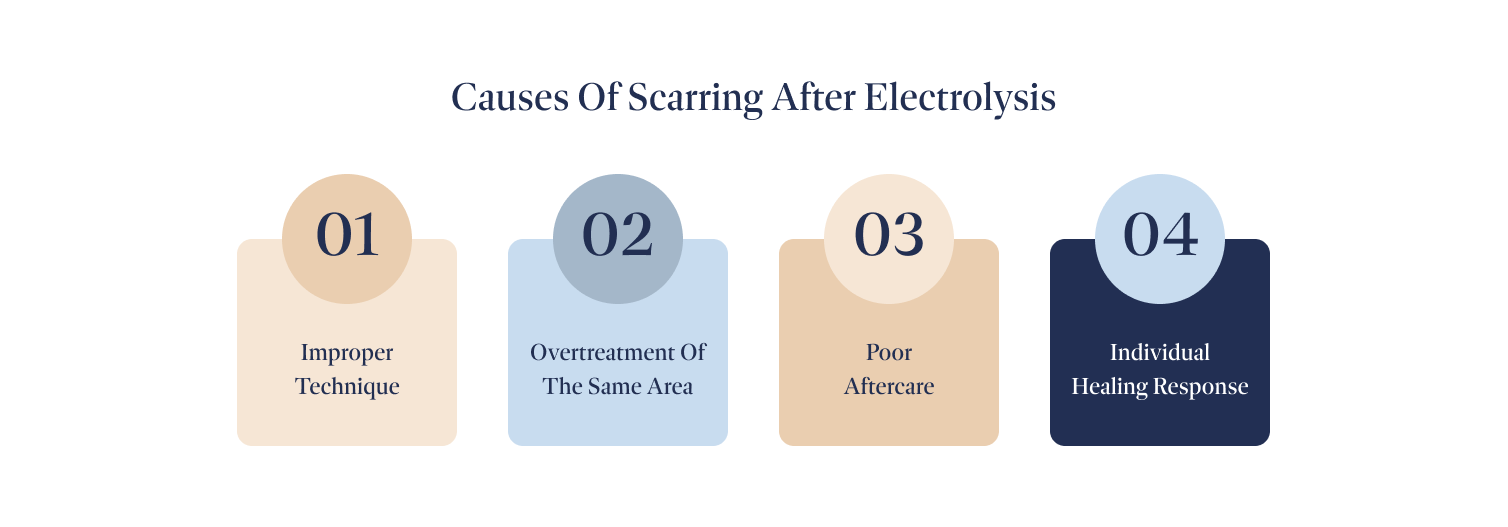
- Improper Technique: Incorrect probe insertion or excessive energy settings can increase skin trauma. This is why choosing experienced practitioners is essential.
- Overtreatment of the Same Area:Treating the same follicle repeatedly before the skin heals may increase irritation and healing complications.
- Poor Aftercare: Ignoring recommended aftercare increases the chance of irritation or infection, which can affect healing. Many of the temporary Side Effects of Electrolysis can be managed effectively when proper care is followed.
- Individual Healing Response: Some individuals naturally heal more slowly or are more prone to scar formation. A professional consultation helps identify these factors before treatment begins.
How to Prevent Scarring from Electrolysis
If you’re wondering how to prevent scarring from electrolysis, the answer comes down to three core principles: professional technique, consistency, and aftercare.
Choose an Experienced Provider
Skill matters. Qualified electrologists understand hair growth patterns, skin sensitivity, and treatment settings. At Top Electrolysis, we focus on conservative treatment planning and gradual progress rather than aggressive clearing in a single session. We adjust energy levels based on skin response and hair type to reduce unnecessary irritation.
Follow Proper Post-Treatment Care
Allowing proper healing between sessions reduces irritation risk. Keeping the treated area clean, avoiding harsh skincare products, and protecting the skin from sun exposure are essential steps.
Allow Proper Healing Time
Allowing proper healing between sessions reduces irritation risk. Following a structured treatment timeline helps prevent overtreatment of the same follicles. Spacing sessions appropriately reduces inflammation and protects skin integrity.
When these factors align, electrolysis remains a safe option even for sensitive or darker skin tones.
What Normal Healing Looks Like After Electrolysis
Understanding the difference between normal healing and scarring helps reduce anxiety during treatment.
Normal post-treatment reactions may include:
- Mild redness
- Temporary swelling
- Slight warmth or tenderness
- Small surface healing spots
These reactions usually resolve within hours or days, depending on the treatment area. True scarring typically involves long-term skin texture or colour changes, which are rare when proper treatment protocols are followed.
Electrolysis Safety in NYC’s Climate and Lifestyle
NYC’s environment can affect skin healing, especially due to seasonal weather changes. Cold winters can increase dryness, while summer heat and humidity may increase skin sensitivity. Protecting treated skin from extreme weather and maintaining proper skincare routines supports healing throughout the year.
Urban lifestyles, including pollution exposure and frequent skincare product use, can also influence skin recovery. Customised treatment planning helps address these environmental factors.
Why Education and Communication Matter During Treatment
Clients who understand treatment timelines, healing stages, and skin care requirements typically experience smoother treatment progress. Open communication with your electrologist allows adjustments to treatment intensity and scheduling based on skin response.
This collaborative approach supports safer outcomes and reduces anxiety about potential side effects.
Final Thoughts
The fear of electrolysis scarring is understandable, but it shouldn’t stop you from exploring a treatment that has been safely used for generations. When performed correctly and paired with proper aftercare, electrolysis carries a low risk of permanent scarring.
Choosing skilled professionals makes a meaningful difference. At Top Electrolysis, treatment planning focuses on precision, skin safety, and personalised care. With the right technique and thoughtful aftercare, electrolysis can provide reliable long-term results without compromising skin health.
