
Dermaplaning: Complete Guide To Benefits, Safety, Results, And Aftercare
You’re using the right products. You’re consistent with your skincare. And yet, your skin still feels slightly rough, looks a bit dull, and doesn’t quite reflect the results you expect.
If that sounds familiar, the issue may not be your routine, but what’s sitting on the surface of your skin. Dermaplaning is a non-invasive exfoliation method that removes dead skin cells and fine facial hair, helping improve skin texture and overall appearance.
This works because even a thin layer of buildup can interfere with how your skin looks and how effectively your products absorb. According to the National Institutes of Health, environmental exposure and natural aging can slow down skin cell turnover, leading to visible dullness and uneven texture over time.
By removing this outer layer, dermaplaning helps reset the skin surface, making it smoother, more refined, and better able to respond to your skincare routine.
What Is Dermaplaning?
Dermaplaning is a skin treatment that exfoliates the surface by removing dead skin cells and fine facial hair using a sterile blade.
Using a sterile surgical blade, a trained practitioner gently removes:
- Dead skin cells
- Built-up debris
- Fine facial hair (vellus hair)
While it may sound simple, the technique requires precision. When done correctly, dermaplaning creates a smoother surface without irritating the skin.
More importantly, dermaplaning is often included in skincare routines designed to improve skin texture, enhance product absorption, and support overall skin clarity.
How Dermaplaning Works (The Science Behind It)
Dermaplaning works by physically removing the outermost layer of dead skin cells, also known as the stratum corneum, along with fine facial hair. Dermaplaning accelerates this process by manually exfoliating the surface layer, allowing:
- Smoother skin texture
- Improved light reflection (brighter appearance)
- Better penetration of skincare products
Dermaplaning improves skin texture by removing the outermost layer of dead skin cells and supporting natural skin renewal.
Why Dermaplaning Is Popular In NYC
Living in NYC means your skin is constantly exposed to external factors. Dermaplaning helps improve skin texture by removing environmental buildup and dead skin from the surface. From pollution and dust to seasonal dryness in winter and humidity in summer, these conditions contribute to buildup on the skin’s surface.
Over time, this can lead to dullness, uneven texture, and clogged pores. Dermaplaning has become popular because it directly addresses this buildup. It provides a quick, effective way to refresh the skin without downtime, making it ideal for busy schedules.
Benefits Of Dermaplaning
One of the reasons dermaplaning continues to grow in popularity is the immediate and visible difference it creates. Dermaplaning improves skin texture by removing surface-level buildup and enhances how skincare products interact with the skin. Here are some of the benefits that dermaplanning NYC offers:
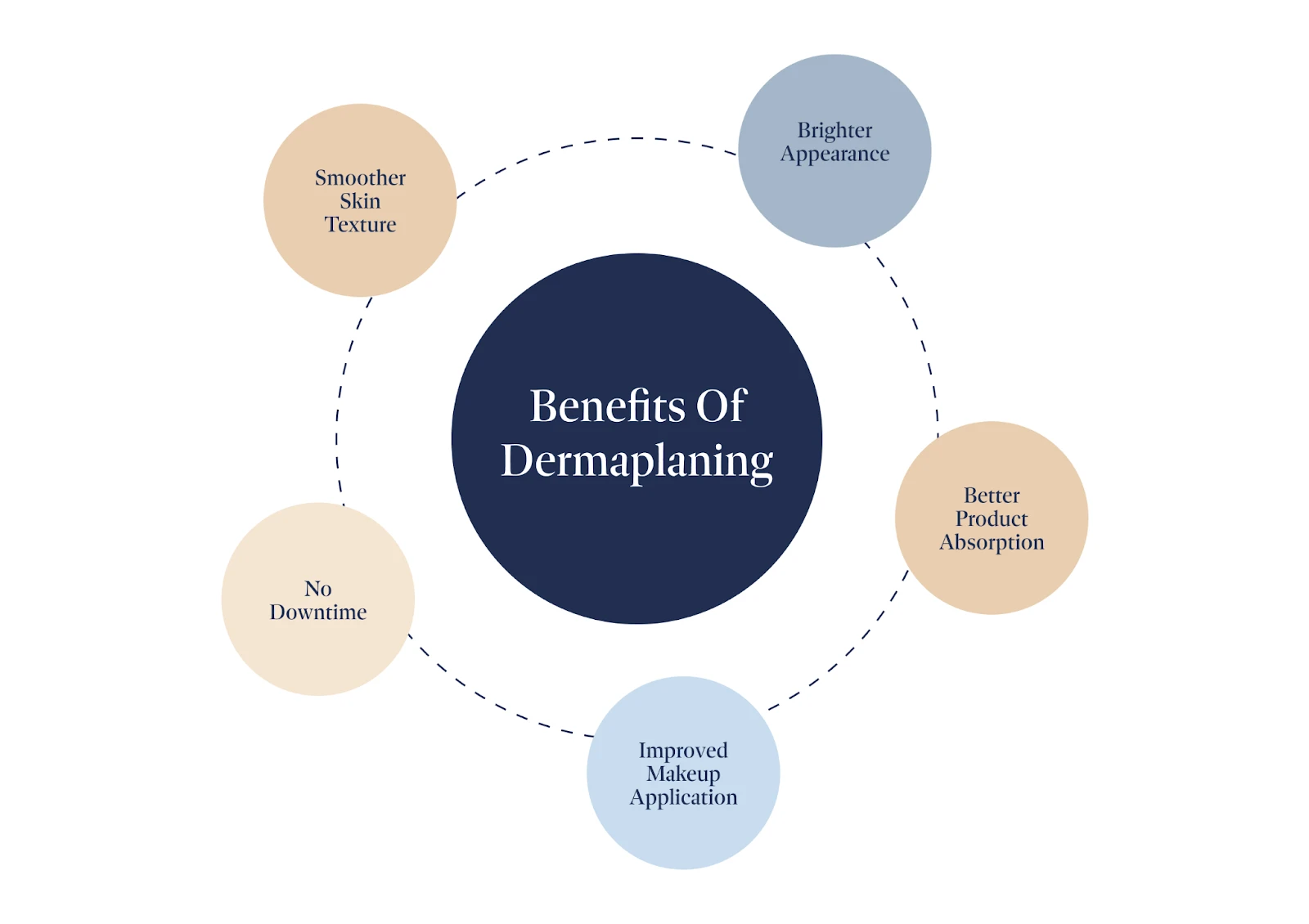
- Smoother skin texture: By removing rough, uneven buildup, dermaplaning leaves the skin noticeably softer.
- Brighter appearance: Dull skin is often caused by dead skin accumulation. Removing it helps restore a natural glow.
- Better product absorption: Skincare products can penetrate more effectively once the surface barrier is cleared.
- Improved makeup application: Makeup sits more evenly on smooth skin, reducing patchiness.
- No downtime: As a non-invasive treatment, dermaplaning fits easily into regular routines without recovery time.
Is Dermaplaning Safe?
Yes, dermaplaning is considered a safe and controlled exfoliation method, especially when carried out by trained professionals using sterile tools.
Suitable for:
- Dull or uneven skin
- Dry or rough texture
- Individuals looking for gentle exfoliation
When to avoid it:
- Active acne
- Inflamed or irritated skin
- Certain sensitive skin conditions
In clinical practice, dermaplaning is often recommended as a controlled exfoliation method for individuals dealing with surface-level skin concerns. Proper technique, hygiene, and skin assessment play a key role in ensuring both safety and consistent results.
Dermaplaning Side Effects
Dermaplaning has minimal side effects, especially when done professionally.
Possible temporary effects include:
- Mild redness
- Slight sensitivity
- Temporary dryness
These effects are short-lived and can be managed with proper aftercare.
Dermaplaning At Home vs Professional Treatment
With the rise of at-home tools, many people consider trying dermaplaning themselves. However, there is a clear difference between at-home dermaplaning and professional treatment.
| At-home dermaplaning | Professional dermaplaning |
| Less precise | Performed with sterile tools |
| Higher risk of irritation | Controlled technique |
| Limited effectiveness | Tailored to individual skin needs |
Professional dermaplaning provides safer and more consistent results compared to at-home methods.
Dermaplaning vs Other Treatments
| Treatment | How It Works | Depth | Best For | Downtime |
| Dermaplaning | Physical exfoliation with a blade | Surface | Texture, dullness | None |
| Dermabrasion | Mechanical resurfacing | Deep | Scars, wrinkles | High |
| Chemical Peel | Chemical exfoliation | Varies | Pigmentation, texture | Mild–Moderate |
| Laser Treatments | Light-based skin resurfacing | Deep | Scars, aging | Moderate |
| Electrolysis | Destroys hair follicle | Follicle-level | Permanent hair removal | Minimal |
Dermaplaning Results And What To Expect
One of the biggest advantages of dermaplaning is how quickly results appear. Since dermaplaning delivers immediate improvements in skin texture and appearance.
Immediately after treatment:
- Skin feels smoother
- Texture looks more refined
- Skin appears brighter
With regular sessions:
- Skin maintains improved texture
- Product effectiveness improves
- Overall skin clarity becomes more consistent
Dermaplaning Aftercare
Aftercare plays an important role in maintaining results.
Recommended:
- Use gentle skincare products like IsClinical Hydracool Serum
- Apply sunscreen daily
- Keep skin hydrated
Avoid:
- Harsh exfoliants
- Direct sun exposure
- Strong active ingredients after treatment
Proper aftercare helps protect the skin and extend dermaplaning results.
Who Should Consider Dermaplaning
Dermaplaning is particularly beneficial for individuals who:
- Experience dull or uneven skin
- Want a smoother makeup application
- Notice buildup from dead skin or environmental exposure
- Prefer non-invasive treatments with no downtime
Therefore, it is ideal for individuals looking for immediate skin texture improvement without downtime.
Dermaplaning for Different Skin Types
Dermaplaning is not a one-size-fits-all treatment. Its suitability depends on individual skin type and condition.
Normal Skin
- Typically responds well
- Helps maintain smooth texture and brightness
Dry Skin
- Beneficial for removing flaky buildup
- Improves product absorption
Oily Skin
- Can help reduce surface buildup
- May improve overall skin clarity
Sensitive Skin
- Can be suitable when performed gently
- Requires professional assessment
Acne-Prone Skin
- Not recommended for active acne
- May be considered for non-inflamed skin
Rosacea or Reactive Skin
- Requires caution
- Should be evaluated before treatment
Dermaplaning suitability depends on skin condition, and a professional assessment helps determine if it is appropriate.
How Top Electrolysis (NYC) Can Help
Top Electrolysis is an NYC-based practice with experience in skin-focused treatments and long-term care approaches. From a practitioner’s perspective, dermaplaning is often used as part of a broader skincare routine focused on improving skin texture and maintaining surface-level clarity through controlled exfoliation.
How your treatment is planned
Before performing dermaplaning, the treatment is approached with a structured assessment to ensure both safety and effectiveness.
This typically includes:
- Skin evaluation to assess texture, sensitivity, and overall skin condition
- Discussion of goals, such as improving dullness, uneven texture, or product absorption
- Review of skin history to identify any conditions that may affect the treatment
- Pre-treatment guidance, if needed, to prepare the skin
In some cases, progress may be tracked over time to evaluate how the skin responds to treatment and to refine the approach if necessary.
In practice, dermaplaning delivers the best results when it is tailored to the individual rather than treated as a one-size-fits-all procedure. Careful planning, proper technique, and attention to skin condition are what ensure consistent and safe outcomes.
Common Myths About Dermaplaning
Several misconceptions about dermaplaning can create confusion. Here are some of the myths around dermaplaning that need to be busted.
Myth 1: Hair grows back thicker after dermaplaning
This is not accurate. Dermaplaning does not change hair thickness or growth pattern. It does not touch the hair root, so it does not affect how the hair grows or its thickness.
Myth 2: Dermaplaning causes breakouts
Dermaplaning itself does not cause breakouts. However, improper technique or hygiene can lead to irritation.
Myth 3: It thins the skin over time
Dermaplaning removes dead skin cells, not living skin layers, and does not thin the skin.
Myth 4: It replaces all other treatments
Dermaplaning improves surface texture but does not replace treatments that target deeper skin concerns.
Dermaplaning is a surface-level treatment and does not alter hair growth or skin thickness.
Conclusion
Dermaplaning offers a simple yet effective way to improve skin texture, remove surface buildup, and enhance overall skin appearance. It is especially suited for individuals looking for visible results without downtime, making it a practical addition to skincare routines in NYC. With consistent treatments and proper aftercare, dermaplaning can help maintain smoother, clearer, and more refined skin over time.
If you’re considering dermaplaning in NYC as part of your skincare routine, a professional consultation can help determine whether it aligns with your skin type and goals.
Book a consultation with Top Electrolysis to understand how dermaplaning can be integrated into a personalized skincare approach.
Frequently Asked Questions
- Is dermaplaning safe for sensitive skin or acne-prone skin?
Yes, dermaplaning is generally safe for most skin types when performed by a trained professional. However, it is not recommended for active acne or inflamed skin, as it can increase irritation. A consultation helps determine if it is suitable for your skin condition. - How much does dermaplaning cost in NYC?
The cost of dermaplaning in NYC typically ranges from $75 to $200 per session, depending on the provider and treatment setup. Pricing may vary based on experience, location, and whether it is combined with other skincare treatments. At Top Electrolysis, the treatment is performed by experienced professionals, including one of our exceptional dermaplaning specialists, Kristina, who holds a degree in Dermatology from Ukraine, bringing a deeper understanding of skin to every session. - How often should you get dermaplaning done?
Dermaplaning is usually recommended every 3 to 4 weeks, depending on your skin type and how quickly dead skin builds up. - Is dermaplaning better than chemical exfoliation?
Yes, dermaplaning provides immediate, physical exfoliation and is often preferred for instant smoothness. Chemical exfoliation works differently by dissolving dead skin over time. The better option depends on your skin type and goals. - Can I do dermaplaning at home safely?
At-home dermaplaning is possible, but it carries a higher risk of irritation and uneven results. Professional dermaplaning is safer because it uses sterile tools and controlled techniques.
