
Dermaplaning at Home: What You Should Know
It’s tempting. A quick search shows countless tools, tutorials, and claims that you can achieve smooth, glowing skin at home with a simple dermaplaning razor. But the results people expect and the reality of at-home dermaplaning are often not the same. Dermaplaning at home can remove some surface buildup, but it is not as effective or as safe as professional dermaplaning.
The reason lies in technique, tools, and skin assessment. According to information from Healthline, dermaplaning may lead to side effects such as breakouts, irritation, temporary redness or discoloration, and a potential risk of infection. Therefore, dermaplaning at home is possible using over-the-counter tools, but it carries higher risks compared to professional treatment. While it may provide mild exfoliation, improper technique or hygiene can lead to irritation, breakouts, or skin damage.
It is less precise and carries a higher risk than professional dermaplaning performed with sterile tools and controlled technique. If you want a complete understanding of how dermaplaning works, its benefits, and professional approach, refer to our latest blog on Dermaplaning: Complete Guide to Benefits, Safety, Results, and Aftercare
How to Perform Dermaplaning at Home?
Dermaplaning at home involves using a handheld dermaplaning razor or tool to remove surface buildup.
These tools are typically:
- Smaller
- Less sharp than professional blades
- Designed for basic exfoliation
What it does:
- Removes some dead skin
- Reduces surface-level dullness
- Removes fine facial hair temporarily
At-home dermaplaning provides limited surface exfoliation but does not match professional treatment results.
Dermaplaning at Home Tools
Professional dermaplaning tools are medical-grade and used with precise technique, while at-home tools are simplified versions. There are several tools marketed for DIY dermaplaning.
Common tools include:
- Dermaplaning razors
- Facial exfoliation blades
- Electric exfoliation tools
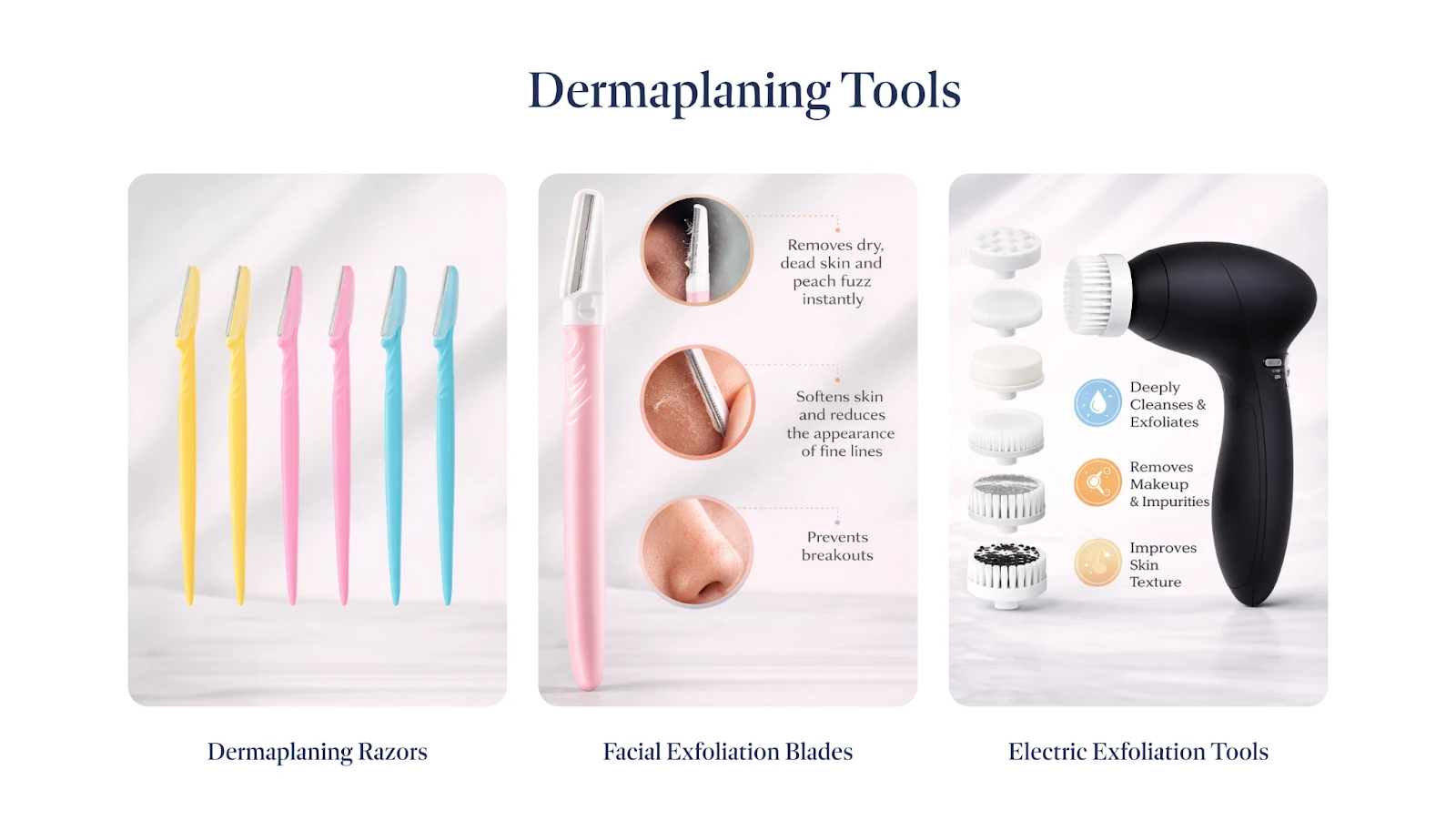
At-home dermaplaning tools are less precise and less effective than professional-grade instruments.
Is Dermaplaning at Home Safe?
The short answer is yes, it can be safe, but only when done carefully, and even then, risks remain.
Why safety is a concern:
- Lack of professional technique
- No proper skin assessment
- Risk of over-exfoliation
- Hygiene inconsistencies
Dermaplaning at home is more prone to irritation and errors compared to professional treatment.
Dermaplaning at Home Risks
Understanding the risks is critical before attempting DIY dermaplaning.
Common risks include:
- Skin irritation
- Redness and sensitivity
- Minor cuts or nicks
- Breakouts due to bacterial spread
Longer-term concerns:
- Skin barrier damage
- Increased sensitivity
- Uneven exfoliation
Most dermaplaning at home risks come from improper technique and a lack of sterile conditions.
Can At-Home Dermaplaning Cause Breakouts
Yes, many people report breakouts after dermaplaning at home.
Why does this happen?
- Bacteria spread across the skin
- Tools are not properly sanitized
- Skin is already congested
- Over-exfoliation disrupts skin balance
Therefore, breakouts after dermaplaning at home are often caused by hygiene issues or improper technique.
Professional vs At Home Dermaplaning
This is where the difference becomes clear. Professional dermaplaning provides safer, more consistent, and more effective results than at-home methods.
| Factor | At-Home Dermaplaning | Professional Dermaplaning |
| Precision | Limited | High |
| Hygiene | Variable | Controlled |
| Effectiveness | Mild | Significant |
| Risk Level | Higher | Lower |
| Results | Inconsistent | Reliable |
Why Professional Dermaplaning Is Safer
Professional dermaplaning is more about the process than the tool. It reduces risk through controlled technique and proper skin evaluation.
What makes it safer:
- Skin assessment before treatment
- Use of sterile, medical-grade tools
- Controlled technique
- Proper aftercare guidance
In practice, dermaplaning requires understanding skin sensitivity, pressure control, and direction of movement, factors that significantly impact results and safety.
Who Should Avoid Dermaplaning at Home
At-home dermaplaning is not suitable for everyone.
Avoid if you have:
- Active acne
- Sensitive or reactive skin
- Rosacea
- Inflamed or compromised skin barrier
Individuals with sensitive or acne-prone skin should avoid dermaplaning at home.
When At-Home Dermaplaning Might Be Considered
While not recommended as a primary method, some individuals still choose it for maintenance.
If attempting at home:
- Use clean tools
- Avoid active acne
- Be gentle
- Do not over-exfoliate
At-home dermaplaning should be approached cautiously and not treated as a substitute for professional care.
Why trust Top Electrolysis (NYC)
Top Electrolysis is an NYC-based practice focused on skin treatments and long-term care, where each approach is guided by careful evaluation rather than assumption. Practitioners assess skin type, sensitivity, and underlying concerns before recommending treatments, ensuring that exfoliation methods like dermaplaning are performed safely and effectively.
In practice, professional dermaplaning delivers more consistent results because it combines technique, hygiene, and experience, factors that cannot be replicated through at-home tools alone.
This level of precision is reflected in the work of practitioners like Kristina, an exceptional dermaplaning specialist at the clinic who holds a degree in Dermatology from Ukraine and brings a clinically informed approach to each treatment.
Conclusion
Dermaplaning at home provides limited results and carries higher risks, while professional dermaplaning offers safer, more effective, and more consistent outcomes.
If you’re considering dermaplaning but are unsure about doing it at home, a professional consultation can help you avoid unnecessary risks and achieve better results.
Book a consultation with Top Electrolysis in NYC to understand whether dermaplaning is suitable for your skin and how it can be done safely.
Frequently Asked Questions
- Is dermaplaning at home safe, or should I get it done professionally in NYC?
Dermaplaning at home can be done with caution, but it carries higher risks due to a lack of technique and sterile conditions. Professional dermaplaning in NYC is safer and more effective because it includes proper skin assessment, controlled technique, and hygiene.
- Can dermaplaning at home cause breakouts or irritation?
Yes. Breakouts and irritation can occur if tools are not properly cleaned, if the skin is already congested, or if too much pressure is applied. These risks are significantly lower with professional treatments.
- What is the safest way to do dermaplaning at home?
If attempted at home, use clean tools, avoid active acne, apply minimal pressure, and do not over-exfoliate. However, professional dermaplaning remains the safer option for consistent results.
- What tools are used for dermaplaning at home, and are they effective?
At-home dermaplaning tools include facial razors and blades designed for surface exfoliation. While they can remove some buildup, they are less precise and less effective than professional-grade tools.
- Is professional dermaplaning worth it compared to at-home methods?
Yes. Professional dermaplaning provides more consistent results, reduces the risk of irritation, and ensures proper technique, making it a more reliable option.
