
Dermaplaning vs Dermabrasion: Key Differences, Benefits & Which Is Right for You
Dermaplaning and dermabrasion are both exfoliation treatments, but they differ in depth, intensity, and results. Dermaplaning is a gentle, surface-level treatment with no downtime, while dermabrasion is a deeper resurfacing procedure used for more advanced skin concerns like scars and uneven texture.
At first glance, they sound similar. Both involve exfoliation. Both aim to improve skin appearance. But in practice, they work very differently, and choosing the wrong one can lead to results that don’t match your expectations.
This distinction matters because not all skin concerns require the same level of treatment. According to clinical dermatology insights from the National Library of Medicine, deeper resurfacing treatments like dermabrasion are typically used for more advanced skin concerns, such as scars, while lighter exfoliation methods address surface-level texture.
In a city like NYC, where environmental exposure and fast-paced routines impact skin health, understanding this difference helps you choose a treatment that aligns with both your skin type and lifestyle.
What Is Dermaplaning?
Dermaplaning is a surface-level exfoliation method that removes dead skin cells and fine facial hair, improving skin texture and brightness without affecting deeper layers.
It removes:
- Dead skin cells
- Surface buildup
- Fine facial hair
It’s best for:
- Dull skin
- Uneven texture
- Improving product absorption
- Smoother makeup application
This treatment is designed to improve skin texture without downtime. If you want a complete understanding of dermaplaning, including benefits, safety, and aftercare, refer to our Guide on dermaplaning.
Key Benefits of Dermaplaning
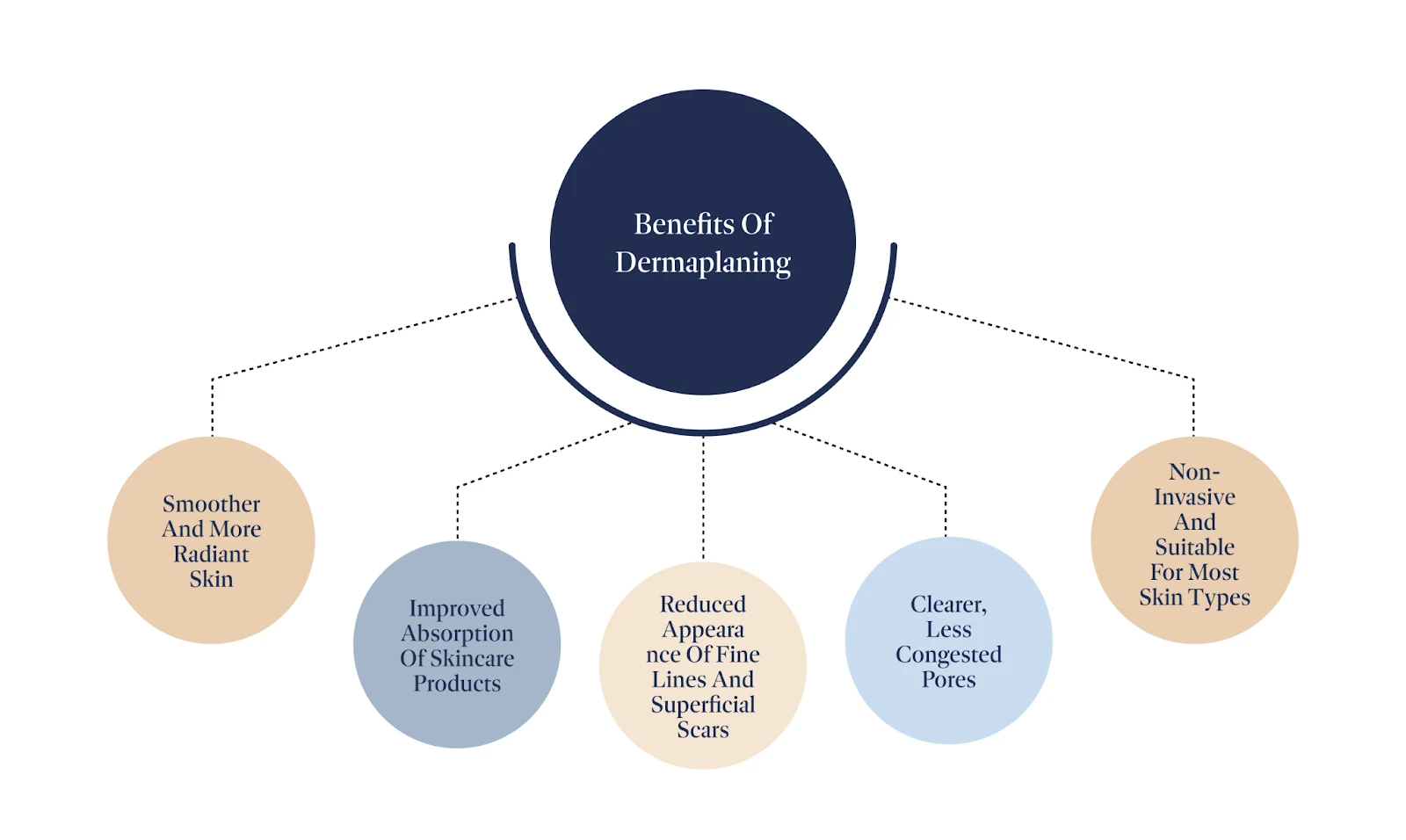
- Smoother and more radiant skin: By removing dead skin buildup and fine facial hair, dermaplaning reveals a fresher layer of skin, resulting in a brighter and more even-looking complexion.
- Improved absorption of skincare products: Clearing the surface enables serums and moisturizers to penetrate more effectively, resulting in better outcomes.
- Reduced appearance of fine lines and superficial scars: Regular exfoliation supports natural skin renewal, which can gradually improve the look of fine lines and mild acne scarring.
- Clearer, less congested pores: Removing accumulated debris and dead skin helps reduce pore blockage, which may lower the chances of future breakouts. However, dermaplaning should not be performed on active acne.
- Non-invasive and suitable for most skin types: As a mechanical exfoliation method, dermaplaning does not rely on chemicals, making it a suitable option for many skin types, including sensitive skin when performed correctly.
What Is Dermabrasion?
Dermabrasion is a more intensive skin resurfacing procedure. It uses a rotating device to remove multiple layers of skin, promoting the regeneration of new skin.
It’s best for:
- Acne scars
- Deeper wrinkles
- Sun damage
- Uneven skin tone
Dermabrasion targets deeper layers of the skin to treat more advanced concerns like scarring.
Key Benefits of Dermabrasion
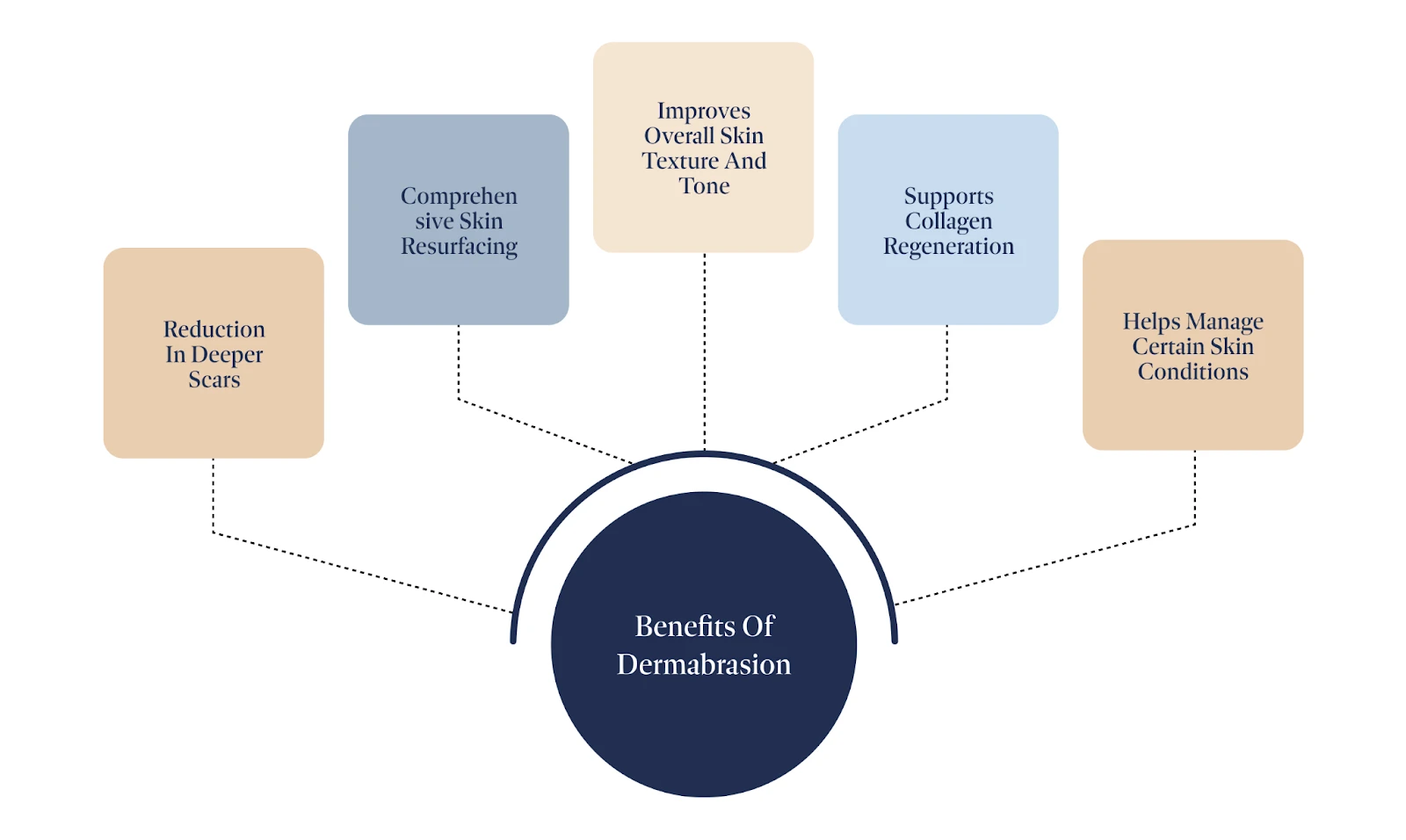
- Reduction in deeper scars: Dermabrasion is effective in improving the appearance of deeper acne scars, surgical marks, and skin injuries by resurfacing the affected area.
- Comprehensive skin resurfacing: By removing damaged outer layers, dermabrasion promotes the growth of new, healthier skin cells.
- Improves overall skin texture and tone: Helps smooth uneven or rough skin while reducing concerns like hyperpigmentation, sun damage, and age spots.
- Supports collagen regeneration: The treatment stimulates collagen production, which can improve skin firmness and contribute to a more youthful appearance over time.
- Helps manage certain skin conditions: Dermabrasion may be used in cases like rhinophyma to reduce thickened or inflamed skin.
Dermaplaning vs Dermabrasion
Dermaplaning is ideal for surface-level improvement, while dermabrasion is suited for deeper skin correction.
| Feature | Dermaplaning | Dermabrasion |
| Depth | Surface-level | Deep layers |
| Downtime | None | Moderate to high |
| Pain Level | Minimal | Moderate |
| Best For | Texture, glow | Scars, wrinkles |
| Recovery | Immediate | Days to weeks |
Dermaplaning vs Dermabrasion for Acne Scars
This is one of the most searched comparisons.
Dermaplaning for acne scars:
- Limited effectiveness
- Works only on surface irregularities
Dermabrasion for acne scars:
- More effective
- Targets deeper skin layers
Dermabrasion is more suitable for acne scars because it reaches deeper layers of the skin.
Dermaplaning vs Dermabrasion Cost (NYC)
Cost varies based on treatment type and intensity.
Typical ranges in NYC:
- Dermaplaning → $75–$200 per session
- Dermabrasion → Higher due to medical procedure level
Dermabrasion is typically more expensive due to its depth and clinical nature.
Which Is Better: Dermaplaning or Dermabrasion?
The answer depends on your skin goals.
Choose dermaplaning if you want:
- Smoother skin
- Brighter appearance
- No downtime
- Maintenance-level treatment
Choose dermabrasion if you want:
- Scar reduction
- Deeper skin correction
- Long-term resurfacing
Choosing the right treatment depends on accurate skin assessment and long-term planning. The choice between dermaplaning and dermabrasion depends on whether your concern is surface-level or deeper skin issues.
Why Choose Top Electrolysis (NYC)
Top Electrolysis is an NYC-based practice focused on skin treatments and long-term care, where every recommendation is guided by a careful assessment of individual skin conditions rather than a one-size-fits-all approach. Treatments are carried out by experienced practitioners who evaluate factors like skin type, sensitivity, and underlying concerns before suggesting the most suitable option.
In practice, many individuals benefit from starting with surface-level treatments like dermaplaning before considering more intensive procedures, as the right choice depends on what the skin actually needs, not what is trending. If you’re unsure whether dermaplaning or dermabrasion is the better fit for your skin, a professional consultation can help you make an informed decision and avoid treatments that may not align with your goals.
Conclusion
When comparing dermaplaning vs dermabrasion, the difference comes down to depth, intent, and expectations.
Dermaplaning is designed for surface-level improvement, smoother texture, brighter skin, and no downtime, making it a practical option for regular maintenance. Dermabrasion, on the other hand, is a more intensive procedure suited for deeper concerns like acne scars and significant skin texture issues, but it comes with recovery time.
The right choice depends less on which treatment is “better” and more on what your skin actually needs. For some, a gentle, consistent approach delivers better long-term results than jumping into aggressive treatments.
Book a consultation with Top Electrolysis in NYC to determine the most suitable treatment based on your skin type and goals.
Frequently Asked Questions
- Which is better in NYC: dermaplaning or dermabrasion?
It depends on your skin concern. Dermaplaning is better for improving texture and brightness with no downtime, while dermabrasion is more effective for deeper concerns like acne scars but requires recovery time.
- Is dermaplaning safer than dermabrasion for sensitive skin?
Yes. Dermaplaning is generally safer for sensitive skin because it is a surface-level treatment, whereas dermabrasion is more aggressive and may cause irritation.
- Which treatment has less downtime: dermaplaning or dermabrasion?
Dermaplaning has no downtime, allowing you to return to your routine immediately. Dermabrasion requires downtime that can range from several days to a few weeks.
- Is dermaplaning effective for acne scars?
No, dermaplaning may improve the appearance of very mild, surface-level scars, but it is not effective for deeper acne scars. Dermabrasion is typically more suitable for those cases.
- Can I switch from dermaplaning to dermabrasion later?
Yes. Many individuals start with dermaplaning to improve surface texture and later consider dermabrasion if deeper correction is needed.
